
- Bitcoin is a decentralised digital currency that settles directly between users, secured by a global network of computers rather than a bank.
- Its supply is hard-capped at 21 million coins - about 19.9 million already exist - and the issuance schedule halves every four years, enforced by code every participant verifies.
- Australians buy it three ways: AUSTRAC-registered exchanges, spot Bitcoin ETFs on the ASX and Cboe (VBTC, BTXX, IBTC), or exchange purchase followed by self-custody.
- The ATO treats Bitcoin as a CGT asset: selling, swapping or spending it is generally a taxable event, and local exchanges sit inside the ATO's data-matching program.
- It remains highly volatile - every cycle has produced drawdowns of 50 to 80 percent. Position sizing and custody decisions matter as much as the decision to buy.
What is Bitcoin, in one paragraph
Bitcoin is digital money that works without a central operator. It was described in a 2008 white paper by the pseudonymous Satoshi Nakamoto and launched in January 2009. Instead of a bank keeping the ledger of who owns what, a worldwide network of computers maintains a shared ledger called the blockchain. Anyone can join the network, verify the ledger, and send value to anyone else - no permission required, no business hours, no borders.
That combination is why institutions describe Bitcoin as a new kind of asset rather than a payment app: it behaves like a commodity with a fixed supply schedule, settles like a payments network, and is held like a long-term store of value. Seventeen years in, it secures more value than any bank vault in Australia and trades around the clock against the dollar - the live number is always on our Bitcoin price page.
| Bitcoin by the numbers | |
|---|---|
| Launched | 3 January 2009 (genesis block) |
| Supply cap | 21,000,000 BTC, fixed in code |
| Already mined | ~19.9 million (about 95% of the cap) |
| New supply | 3.125 BTC per block, ~every 10 minutes |
| Next halving | ~2028, cutting issuance to 1.5625 BTC per block |
| Smallest unit | 1 satoshi = 0.00000001 BTC |
| Live AUD price | Bitcoin price & market stats → |
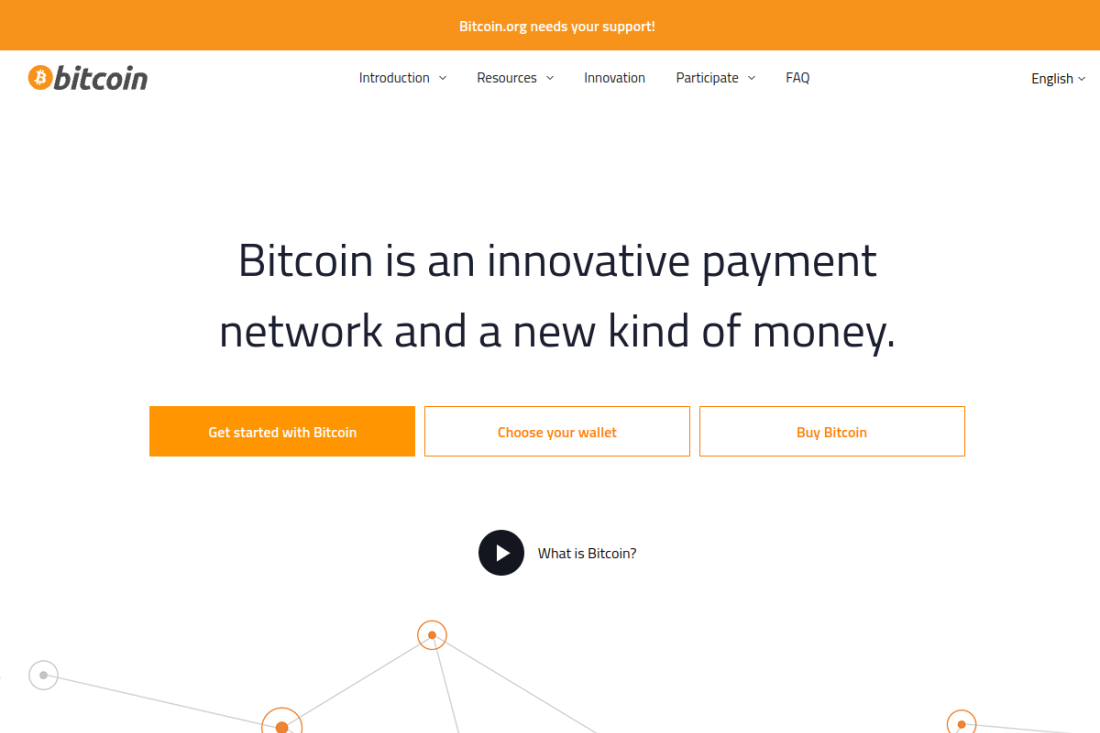
The project's home, bitcoin.org, still hosts the original nine-page white paper - worth reading once, if only to see how much of today's market grew from how small a seed:
How does Bitcoin work?
Three pieces do the heavy lifting:
- The blockchain. A public ledger of every transaction since 2009, grouped into blocks added roughly every ten minutes. Every full node stores and independently verifies a copy, so there is no single point of failure and no single party to corrupt.
- Mining (proof of work). Miners spend real-world energy competing to add the next block. The winner earns newly issued bitcoin plus transaction fees. The cost of that energy is what makes rewriting history economically impractical - an attacker would need to outspend the entire honest network.
- Keys, not accounts. Owning bitcoin means controlling a private key, a secret that authorises spending. Whoever holds the key holds the coins, which is why custody (who keeps the key) is the central security decision for every holder.
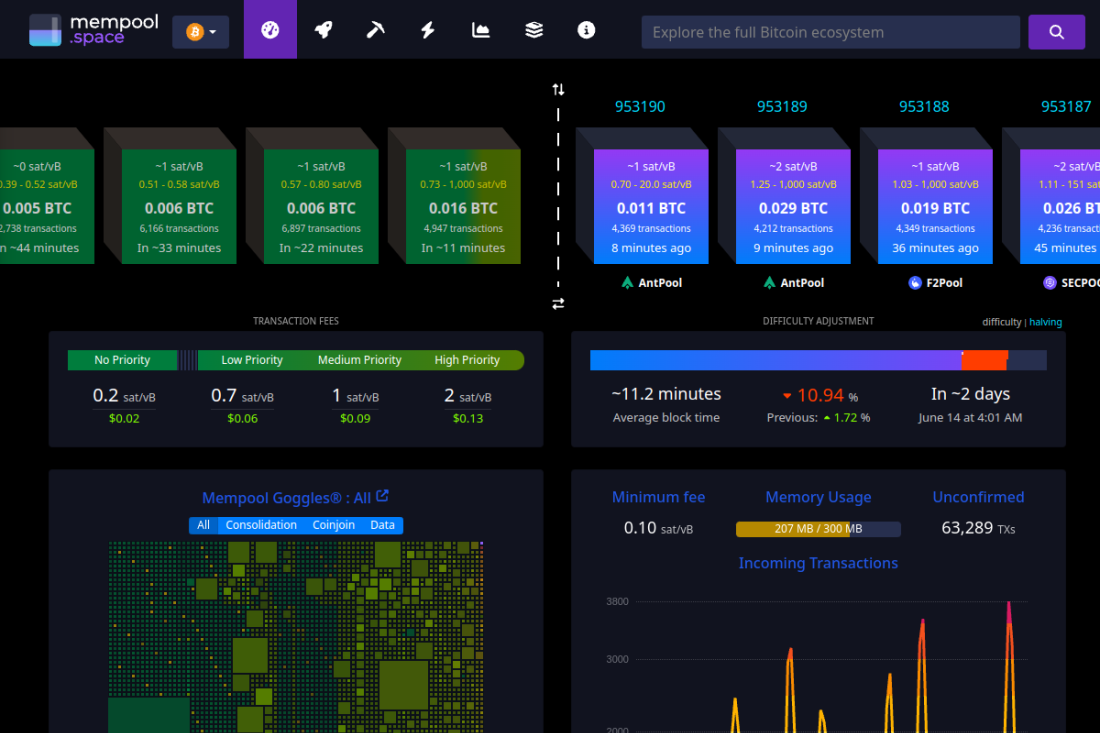
None of this requires trust in a company, and none of it is hidden. Explorers like mempool.space show the system working in real time - blocks arriving, fees bidding for space, the ledger growing - which is the fastest way to make "a public ledger" stop being an abstraction:
Why Bitcoin's 21 million supply cap matters
Bitcoin's issuance is fixed in code. New coins enter circulation as mining rewards, and every 210,000 blocks - roughly four years - that reward halves. The result is a supply curve that rose steeply in the early years and now flattens toward a hard ceiling of 21 million coins, with the final fraction issued around the year 2140:
This is the core of the investment thesis you will hear most often: unlike fiat currencies, where supply policy is set by central banks - the RBA's mandate explicitly includes managing the currency - Bitcoin's monetary policy is fixed and auditable by anyone. Scarcity does not guarantee value; demand does. But it removes one variable entirely, and it is why analysts watch long-term valuation gauges like the MVRV Z-Score and the Rainbow Chart, which compare price to on-chain measures of what holders actually paid.
Bitcoin's price history in AUD
Bitcoin's price history in Australian dollars is a series of violent cycles loosely organised around those halvings: parabolic advances, then drawdowns of 50 to 80 percent, each cycle bottoming above the last. The modelled yearly closes:
Two things follow from that chart. First, the volatility is not a bug to wait out - it is the admission price, and it is why position sizing matters more than entry timing. Second, the cycles are why desks lean on valuation context - MVRV, RSI, the Rainbow bands and sentiment - rather than headlines, and why we track leverage washouts and corporate treasury buying as the supply-and-demand mechanics behind the moves.
How to buy Bitcoin in Australia
Three mainstream routes, with genuinely different trade-offs:
1. Crypto exchanges
Australian platforms and the local arms of global exchanges sell bitcoin for AUD via PayID or bank transfer. Any business converting dollars to crypto here must be registered with AUSTRAC - a baseline check worth making before depositing a cent. Costs differ more than they look: roughly 1% on the easiest brokerage flows down to ~0.3% on order-book venues. Our exchanges table compares fees, spreads and AUD rails across the market, our CoinSpot vs Swyftx comparison covers the two most popular locals in depth, and the CommBank guide walks the full path from a big-four bank account, including the bank-side limits that surprise people.
2. Spot Bitcoin ETFs
Since 2024, spot Bitcoin ETFs listed on the ASX and Cboe Australia - VanEck's VBTC, DigitalX's BTXX and Global X's IBTC among them - hold bitcoin with institutional custodians and trade like any share in your brokerage account, for management fees of roughly 0.45 to 0.6 percent a year. You give up self-custody and around-the-clock trading; you gain familiar settlement, no key management, and access inside existing structures such as SMSFs (subject to advice). Institutional demand for these products has become a market force in its own right - we track issuer flows daily on the Bitcoin ETF flows page.
3. Self-custody
Buying on an exchange, then withdrawing to a wallet whose keys you control. This removes platform risk entirely but makes you fully responsible for the seed phrase - the master backup of your keys. Lose it and the coins are unrecoverable; leak it and they can be stolen silently. Hardware wallets are the standard tool for meaningful balances.
| Exchange | ASX/Cboe ETF | Self-custody | |
|---|---|---|---|
| What you own | BTC, held by platform | Units in a fund holding BTC | BTC, held by you |
| Typical cost | ~0.3 - 1.0% per trade | ~0.45 - 0.6% p.a. | Trade fee + ~A$50-250 hardware |
| Counterparty risk | Platform solvency | Fund + custodian | None - you are the custodian |
| SMSF fit | Via dedicated SMSF accounts | Cleanest paperwork | Possible, audit-heavy |
| Best for | Regular buying | Brokerage-account investors | Long-term holders |
How Bitcoin is taxed in Australia
For most retail investors, the Australian Taxation Office treats bitcoin as a CGT asset, not foreign currency. In practical terms:
- Disposals are taxable events. Selling for dollars, swapping into another crypto asset, or spending bitcoin can each crystallise a capital gain or loss.
- The 12-month discount. Individuals who hold an asset for more than 12 months before disposal are generally eligible for a 50 percent CGT discount on the gain.
- The ATO already knows. Australian exchanges participate in the ATO's data-matching program, which has covered crypto since 2019. Buying through a local platform is visible to the tax office; declare accordingly.
- Records matter. Dates, AUD values at the time, what the transaction was and who the counterparty was - for every transaction, including swaps between coins. Most local exchanges produce EOFY reports that do the heavy lifting.
Tax outcomes depend heavily on individual circumstances - investor versus trader status, SMSF rules, and the deliberately narrow personal-use exemption. Treat this section as a map, not advice, and confirm your position with a registered tax agent. To put rough numbers on a sale, our crypto CGT estimator applies the 50% discount and your marginal rate.
The risks of buying Bitcoin
- Volatility. Drawdowns of 50 to 80 percent have occurred in every Bitcoin cycle, including after each all-time high. Never hold an amount that would force a panicked sale.
- Custody failure. Exchange collapses (most famously FTX in 2022, which reached Australian customers through local platforms) and lost seed phrases have cost holders more than market crashes have. Decide deliberately who holds your keys.
- Scams. Australians reported hundreds of millions of dollars in investment scam losses to Scamwatch in recent years, with crypto payment the common thread. Impersonation, fake exchanges and "recovery" services target holders specifically; Scamwatch and Moneysmart maintain current warnings.
- Regulatory change. Australia's regime is still developing - the government has consulted on a licensing framework for digital asset platforms - and tax treatment and platform rules can shift.
- No safety net. Crypto holdings are not covered by the Financial Claims Scheme that protects bank deposits, and most platforms sit outside AFSL protections.
Bitcoin data worth watching
Whatever your view on Bitcoin, form it from data. These live Coindaily tools cover every metric this guide references:
No indicator calls tops or bottoms reliably. Valuation gauges like MVRV tell you when risk is historically elevated or depressed - they are context for position sizing, not trade signals.
Frequently asked questions
Is Bitcoin legal in Australia?
How much Bitcoin do I need to buy to start?
Do I pay tax on Bitcoin in Australia?
What is the Bitcoin halving?
Can my SMSF hold Bitcoin?
Is it safer to keep Bitcoin on an exchange or in my own wallet?
Sources
- Nakamoto, S. (2008). Bitcoin: A Peer-to-Peer Electronic Cash System. Bitcoin.org.
- Reserve Bank of Australia. Cryptocurrencies - Explainer. rba.gov.au.
- Australian Taxation Office. Crypto asset investments and data matching. ato.gov.au.
- AUSTRAC. Digital currency exchange providers. austrac.gov.au.
- Moneysmart (ASIC). Cryptocurrencies. moneysmart.gov.au.
- Scamwatch (ACCC). Investment scams. scamwatch.gov.au.

The research desk of Coindaily, Australia's crypto data terminal. Guides are written from primary sources, cross-checked against the live market data on this site, and reviewed by the Coindaily editorial team before publishing. Updated when the facts change.